Issue No. 3: The Calatrava
In 1932, as demand collapsed, two dial makers took control of Patek Philippe and removed everything that no longer justified itself.
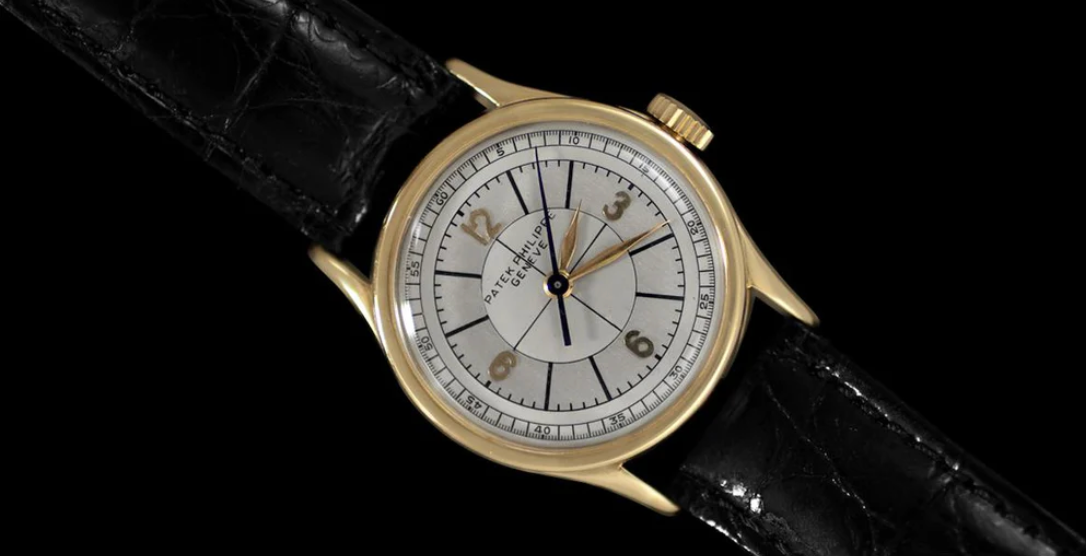
Geneva, 1932.
Something is being taken out.
The calendar mechanism comes first. It has no place in what follows. The chiming train, the minute repeater, the complications that have defined the company’s identity for decades: each removed in turn. What remains after each removal is examined, then reduced again.
This is not destruction. It is a different kind of precision.
The company being reduced is Patek Phillippe.
It has just passed into the control of two brothers, Charles and Jean Stern, dial makers who have supplied its visible surfaces for years. Their company, Cadrans Stern Frères, occupied a particular position in the watchmaking hierarchy—essential but subordinate, the craftsmen of the face rather than the movement. They knew the watch from the outside in. They had spent years making the part that communicates value before the caseback ever opens, before the complication is explained, before the movement is considered. Now, at the bottom of a contraction that has compressed the Swiss watch market to a fraction of what it was before 1929, they are inside the problem.
The directors of Patek Philippe had contacted the Sterns not out of admiration but out of necessity. The Wall Street crash had gutted exports. Customers defaulted on invoices. The company needed capital, and it needed it from someone who would not absorb the brand into a larger group. The Sterns were familiar, independent, and willing.
What they acquired was not stability. It was a business whose assumptions no longer held.
Their first instinct was not to design. It was to hire.
They brought in Jean Pfister, an experienced technical director poached from Tavannes Watch Co. Pfister was a watchmaker, not a designer. His work would not be visible in the finished object: it lived in the caliber, in the tolerances between components, in the behavior of the escapement under load. The Sterns understood that restraint on the surface required confidence beneath it. A watch that shows nothing must perform everything.
Pfister’s first mandate was to end Patek Philippe’s dependence on outside movement suppliers. The company would manufacture its own ébauches. The decision was strategic, not sentimental: if the watch was going to carry no complication as its argument, the argument had to be the movement itself. Precision without display. Value without annotation. Independence—the same principle that had motivated the Sterns to keep the acquisition out of larger hands—would extend to the movement.
But there was a more immediate problem. Patek Philippe needed a watch it could sell.
In 1931, before the acquisition was complete, the company had briefly explored another direction. Jacques-David LeCoultre, a movement supplier to Patek and a member of its board, arranged for eight Reverso cases to be sold to the company. Four in white gold, four in a combination of white and yellow gold. Patek fitted them with LeCoultre movements, signed the dials with its own name, and offered them quietly.
The Reverso was a precise solution. Designed for polo players in British India who kept shattering their crystals, it featured a rectangular case that could slide from its cradle and flip inward, exposing a solid metal back to absorb impact. It was engineered to survive force. It solved a specific, physical problem with mechanical ingenuity.
The Sterns did not pursue it.
The Reverso solved the wrong question. The question in 1932 was not how to protect the watch from force. It was how to make the watch worth protecting. Two of the eight cases entered the company’s museum in Geneva. One surfaced at Christie’s in 2010 and sold for 147,000 Swiss francs. The remaining five have not been accounted for. They are artifacts of a road considered, measured, and not taken.
The Sterns began with what they knew: the surface.
If the Royal Oak was born from a company that needed to become something it had never been—loud, architectural, steel—the Calatrava emerged from the opposite impulse. Patek Philippe needed to become more quietly itself. The complications came out not because they were flawed but because they could no longer carry the argument alone. What remained after each removal was tested against a single question: does this earn its presence?
Hours. Minutes. Seconds. These remained. Everything else was a candidate for removal.
The case arrived at a circle: a form that resolves without interruption, that begins and ends at the same point. The diameter settled at thirty-one millimeters. The profile was thin. The bezel was flat. The lugs curved downward and were cast with the case rather than soldered to it. This single decision changed the watch’s relationship to the wrist, that made it sit rather than perch.
The dial was not simply plain. This is where the dial makers revealed themselves. The surface was diamond-engraved, then filled with black lacquer, then fired. The markers were applied, not printed. The hands moved across a surface that required more labor to produce than most complications required to assemble. The appearance was identical to a simple printed dial—clean, readable, unadorned—but the print could never wear off. The buyer would not know this. The buyer was not supposed to know this.
The simplicity was a performance. Behind it was the same obsessive craft that had always defined Patek Philippe, redirected rather than abandoned. The watch was not spare in the way that a stripped object is spare. It is spare in the way that a completed equation is spare: every element present is necessary, and its necessity is evident.
The reference 96 entered production. It was the first watch in the company’s history to receive a numbered reference, a small administrative change that signaled a larger shift in how the Sterns intended to organize the business. It carried no collection name. The Calatrava designation would come decades later, drawn from the cross Patek Philippe had used as its emblem since 1887: symmetrical, contained, an expression of order achieved through reduction to essential geometry. The watch made the same argument in a different material.
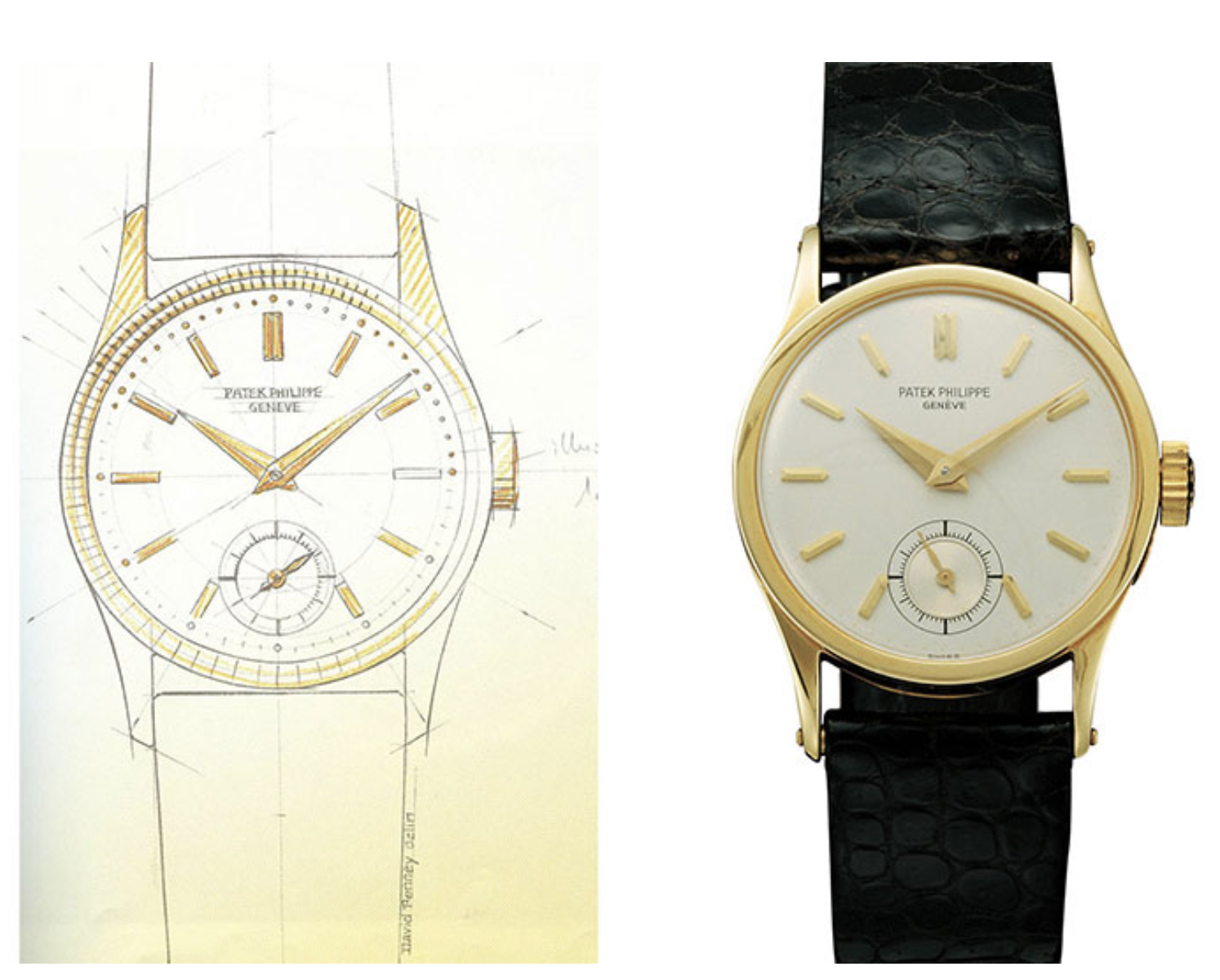
If you hold an early reference 96 today, the first thing you register is the weight—less than you expect. The second is the absence of insistence. The watch does not ask to be noticed. It sits on the wrist without announcement, without the slight forward pressure of a case engineered to be seen. The dial returns your attention rather than holding it. This is not passivity. It is the confidence of an object that has removed everything it did not need and kept everything it did.
Not every company found this clarity.
Waltham Watch Company had once defined the terms. At the 1876 Centennial Exhibition in Philadelphia, Waltham’s manufacturing methods so alarmed the Swiss that they dispatched Jacques David, technical director of Longines, to investigate. His report was a warning: the Americans had industrialized precision. For decades afterward, Waltham’s factory in Massachusetts produced millions of watches that kept trains running on schedule across North America and more than fifty other countries.
When the Depression came, Waltham continued to produce with the same rigor. The watches remained accurate. The market did not return. The company filed for bankruptcy in 1949. By 1957, it was defunct. The factory still stands. It has been converted into housing.
Waltham failed not because its watches stopped working, but because it could not reimagine what a watch was for. It had defined its value through scale and accuracy—the same proposition that would, four decades later, make quartz so devastating that a small company in the Vallée de Joux would commission the Royal Oak. Waltham kept solving the old problem. The Sterns solved the new one.
The Depression ended. Complication returned to Patek Philippe’s production, as it was always going to. The company had not abandoned complexity. It had set it aside long enough to establish what existed without it. The reference 96 remained in production for over forty years, virtually unchanged. The watch did not replace the perpetual calendar or the minute repeater. It preceded them. It made them optional.
The Royal Oak proved that a traditional house could survive by becoming something it had never been. The Calatrava proved something quieter and, in its way, more radical: that a house could survive by becoming more purely itself.
Decades later, the watch the Sterns and Pfister built at the bottom of the worst contraction in modern horological history remains the standard against which dress watches are measured. Not because it solved a technical problem. Not because it introduced a new function. Because two dial makers from Geneva looked at the most celebrated watchmaker in the world and understood something its previous owners had missed: that when the old arguments stop working, the surface is not superficial.
It is the argument.